
Montgomery County Warrant Access
No official Montgomery County, North Carolina active warrant web search was found in the county sources inspected. That finding controls the search path. The Sheriff's Field Services page says deputies serve arrest warrants, subpoenas, civil forfeitures, and domestic violence protection orders. The North Carolina District Court description says magistrates issue warrants for arrest and set bail. The Clerk of Superior Court handles returned warrant records when they become part of a criminal court file.
Active warrants are not handled the same way as old court paperwork. A warrant that has not been served can involve officer safety, victim safety, location information, and court process that staff may not fully disclose by phone. A returned arrest warrant or returned search warrant is different. Under North Carolina law, returned warrants may be public court records unless sealed by court order. That means a Montgomery County warrant search may require a Sheriff call for active status, a magistrate call for process questions, and a clerk search for returned records or linked criminal cases.
Types of Montgomery County Warrants
Montgomery County warrant records can use several labels. Some are issued at the start of a criminal case. Others flow from a missed court date, an alleged probation problem, or the need to search a place or item. The exact name matters because it tells you which office is most likely to have the useful record and what risk may exist if the person contacts law enforcement in person.
- Arrest warrant: A magistrate or judicial official authorizes arrest based on alleged criminal conduct and probable cause.
- Order for arrest or bench warrant: A court order may issue after missed court, failure to comply, or another court event.
- Search warrant: A judicial order allows officers to search a place, item, device, or property under stated limits.
- Domestic violence process: Sheriff's Field Services notes service of domestic violence protection orders, which are court process but not the same as an arrest warrant.
- Failure-to-appear process: Missing traffic or criminal court can lead to added fees, DMV action, or arrest process depending on the case.
Search Montgomery County Warrants Safely
The official path is a fallback chain. Start with the office most tied to the question, then confirm court records if the matter has entered the case file. The Montgomery County Sheriff's Office main number is (910) 572-1313 and non-emergency dispatch is (910) 571-7107. Magistrates are listed at (910) 572-2866. The Clerk of Superior Court is listed at (910) 571-3700 for returned warrant records, criminal case files, court dates, and copy questions. If an emergency exists, use 911.
- Search eCourts Portal by name or record number to see whether a related Montgomery County criminal case is public.
- Call the Clerk of Superior Court for returned warrant records, court dates, and missed-court issues tied to a case number.
- Call the Sheriff's Office or non-emergency dispatch for proper routing when active warrant service may be involved.
- Call magistrates for court process questions they can lawfully answer, including warrant and bail process topics.
- For municipal incident reports, contact Troy Police or Biscoe Police while still checking state court records for filed charges.
The state NC Sex Offender Registry is not a warrant search, but it is one official law-enforcement record system referenced in the research for related public safety checks.
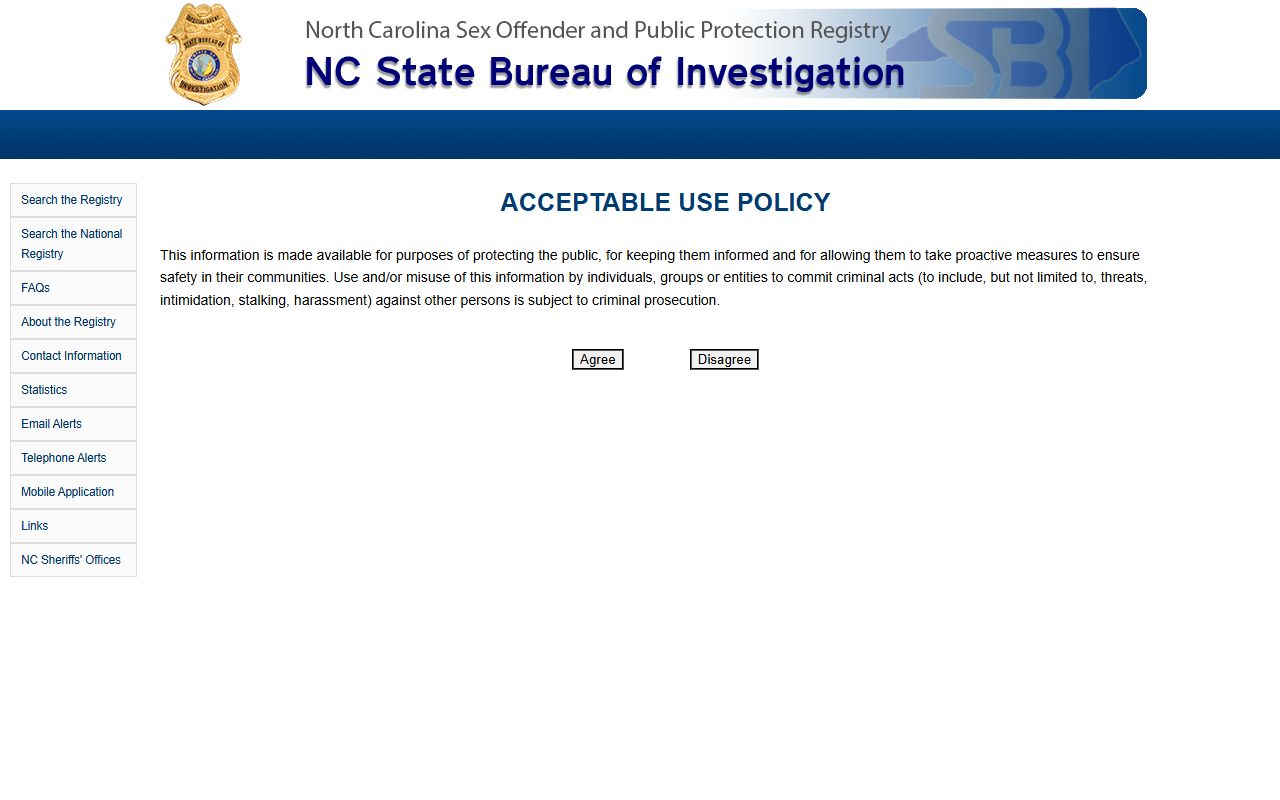
Use it only for registry information; it does not clear an arrest warrant or replace Sheriff, magistrate, or clerk contact.
Montgomery County Warrant Search Fields
The research did not find a public Montgomery County active warrant search form, so the search-field table must describe real official access points instead of fake fields. Portal Smart Search may show a related criminal case after filing or return. The Sheriff and magistrate channels can answer only what policy and law allow. The clerk can help with returned warrant records when the court file is public and the record is not sealed.
| Field Label | Type | Required | Options / Format Notes |
|---|---|---|---|
| Official active warrant web search | n/a | n/a | No official Montgomery County, NC public active warrant search was found. |
| Portal Smart Search | text | optional | Search name or case number; may show a related criminal case after filing or return. |
| Sheriff phone inquiry | phone | n/a | Provide full name, date of birth if known, and reason for inquiry; disclosure may be limited. |
| Clerk returned warrant record | in person / phone | n/a | Returned warrants may be public unless sealed; request by case number or name. |
Note: Portal is useful for related case records, but it is not a guaranteed active-warrant clearance tool.
Montgomery County Warrant Record Fields
No public Montgomery County active warrant listing was available to inspect, so a live result inventory could not be captured. Based on the returned-warrant and criminal court record standards in the research, a warrant-related court record may include the issuing judicial official, the defendant name, the alleged offense, a statute or charge description, a case number, dates, bond terms, return status, and the next court event. Sealed warrants, juvenile warrants, victim addresses, investigative detail, and active operational information may be withheld.
| Field | What It Shows |
|---|---|
| Defendant name | The person named in the court process or criminal case file. |
| Alleged offense | The charge or conduct tied to the warrant or court process. |
| Issuing official | The magistrate or judicial official connected with issuance, when public. |
| Issue and return dates | When the warrant was issued and when it came back to court after service. |
| Bond conditions | Release terms, bond type, or related bail information if entered in the public record. |
| Next court date | The hearing or court appearance connected with the case after service or filing. |
Montgomery County Sheriff App
The research documents a Montgomery County Sheriff NC mobile app in both app stores. The Apple listing names Montgomery County Sheriff's Office (NC) as seller, and the Google Play listing names OCV, LLC as developer. The inspected store text advertises crime reporting, tips, interactive communication features, and public outreach. It does not advertise an active-warrant lookup or jail roster in the text inspected, so the app should be treated as a Sheriff communication and tip channel rather than a verified warrant database.
The Apple App Store listing is one official source for the Montgomery County Sheriff NC app.
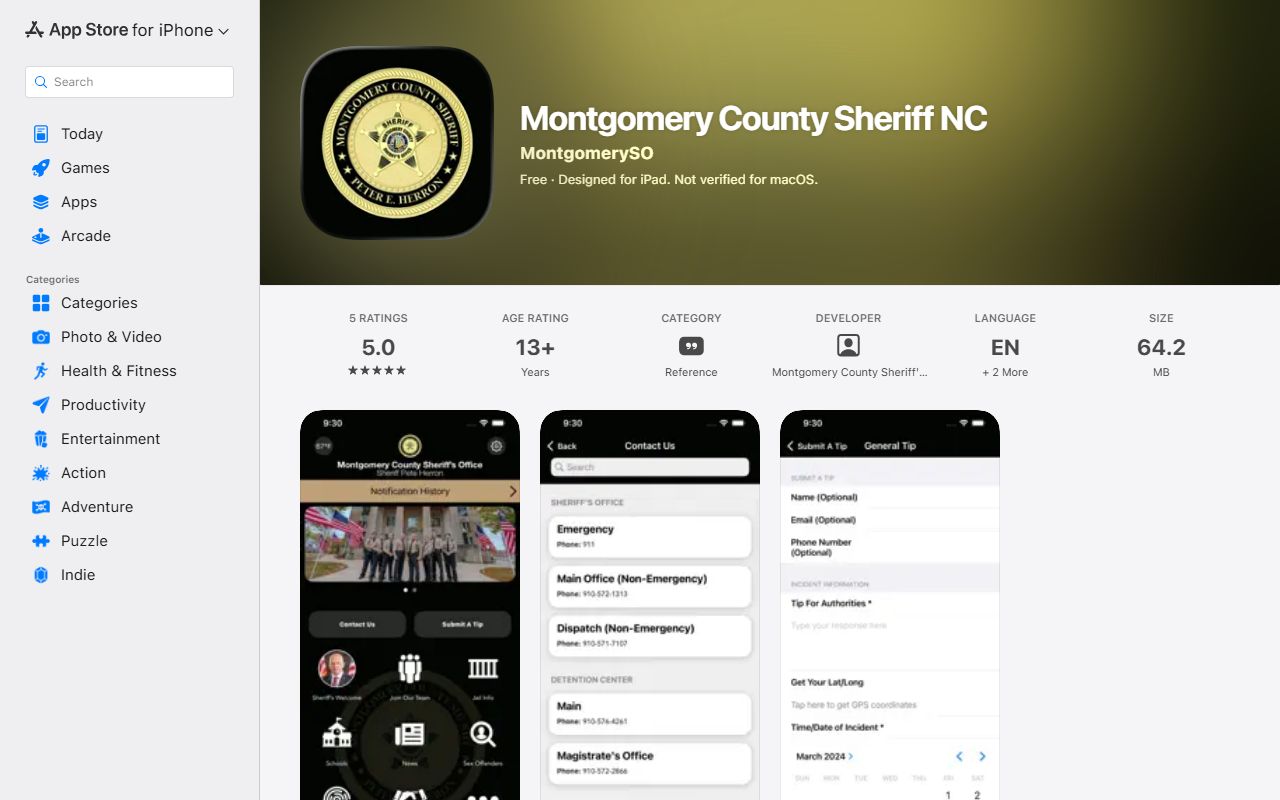
The Apple listing supports mentioning the app, but not claiming that it performs warrant clearance.
The Google Play listing is the paired Android source for the same Montgomery County Sheriff NC app.
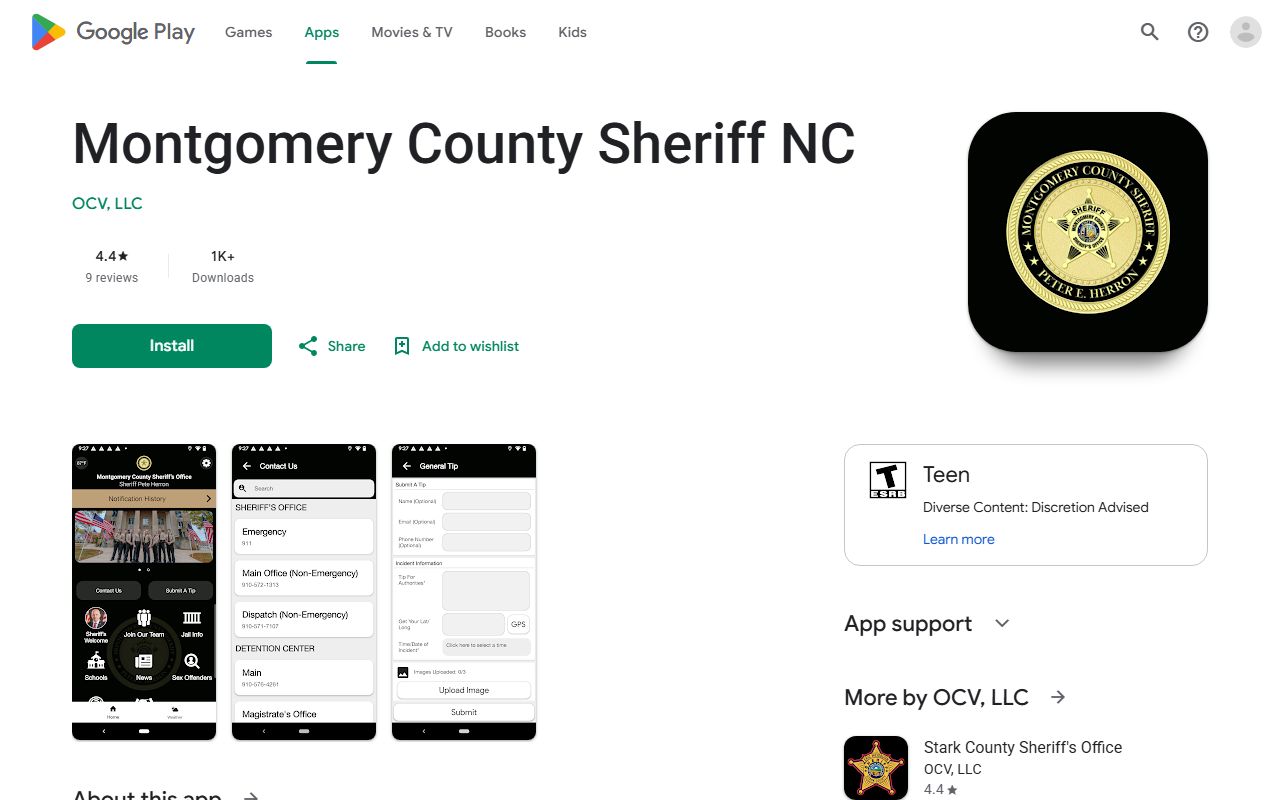
For warrant risk, direct contact with the Sheriff, magistrates, clerk, or an attorney remains more reliable than app text.
Resolve a Montgomery County Warrant
If a Montgomery County warrant may be outstanding, do not rely on wrong-state Montgomery County search results or third-party warrant pages. Confirm the state and county first. A person with a missed court date should call the Clerk of Superior Court and check Portal hearings. A person who may face arrest should speak with a licensed attorney or ask the Sheriff's Office how surrender, bond, and magistrate appearance procedures work. Staff may not give legal advice, but they can route the person to the correct official process.
- Confirm that the matter is Montgomery County, North Carolina, not another Montgomery County in another state.
- Check Portal for a related case number, court date, and public case status.
- Call the Clerk of Superior Court about missed court, returned warrants, or case-file copies.
- Ask the Sheriff or attorney where to report if surrender is required.
- After the issue is handled, verify that court, jail, DMV, or bond records update as expected.
Important: A warrant can lead to arrest, so legal advice is safer than testing warrant status in person without preparation.
Municipal Warrant Report Sources
North Carolina does not operate separate municipal courts for Montgomery County criminal cases. That matters. If Troy Police or Biscoe Police investigated an event, that agency may hold an incident or crash report, but the warrant, charge, and court date still route through the state court system. Troy Police is listed at 120 Broughton Street with non-emergency phone (910) 576-8151. Biscoe Police is listed at 114 West Main Street, and its page identifies Chief Tina Medlin. Use those agencies for reports, then use Portal and the Clerk of Superior Court for court records.
Restricted Montgomery County Warrants
Not every warrant record is public. N.C. Gen. Stat. § 132-1.4 treats criminal investigative material differently from public court records, while returned arrest and search warrants are public court records unless sealed by court order. Juvenile matters, sealed warrants, search-warrant materials tied to ongoing investigations, protected victim details, and sensitive addresses may be withheld. Federal warrants are also separate from Montgomery County Superior Court and District Court records and belong to federal law-enforcement and federal court channels.