
Search Montgomery County Court Records
Online Montgomery County court records run through the North Carolina eCourts Portal, not a county-built case database. The Portal offers Smart Search for case information, Search Hearings for court dates, Make Payments for eligible criminal, infraction, probation, and parole costs, and NC Judgment Search. Montgomery County is part of the statewide eCourts system, so a user should filter to Montgomery County when a search tool offers a location choice. Portal access is useful for a quick case lookup, but it is not the same as standing at the clerk counter and reviewing the public file.
The North Carolina Judicial Branch Montgomery County page also links users to civil calendars, criminal calendars, court dates, payments, forms, and eCourts services. For exact case help, background-check use, certified copies, older paper files, or records that do not appear online, the research points back to the Clerk of Superior Court in Troy. The Judicial Branch says criminal case information may be searched at public self-service terminals in clerk offices, and civil, special proceeding, and estate case information may also be accessed on those terminals.
- Open the eCourts Portal and choose Smart Search for case information or Search Hearings for a date lookup.
- Enter a record number, party name, business name, or other supported search value in the format the Portal requests.
- Use Advanced Filtering Options when available, then narrow by Montgomery County, case type, case status, or file date.
- Review the result for case number, parties, court location, hearings, judgments, and available case details.
- Contact or visit the Clerk of Superior Court when a certified copy, paper file, older record, or background-check search is needed.
The manifest source for the eCourts Portal shows the statewide landing point used for Montgomery County court records.
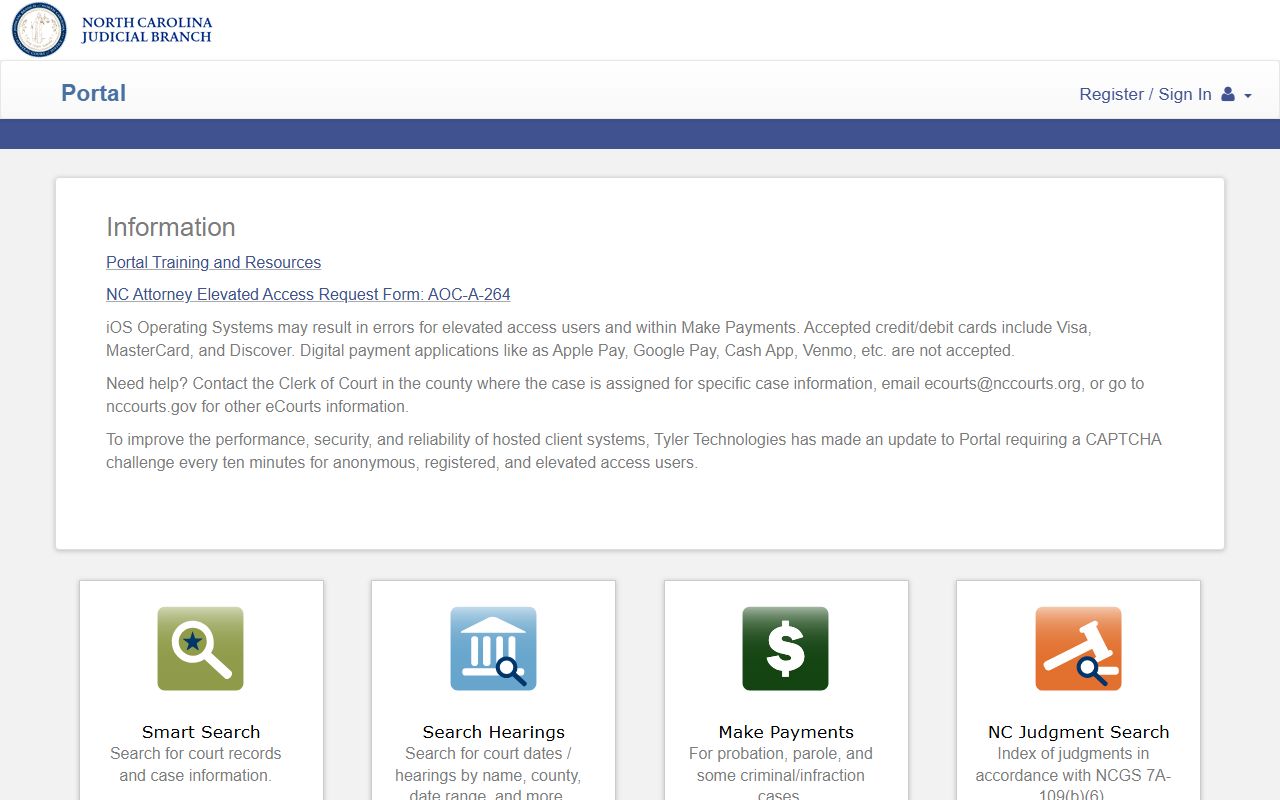
That Portal image fits the Montgomery County search path because local online case lookup starts with state eCourts before a clerk request is made.
Montgomery County Court Records Search Fields
Smart Search accepts a record number or a name in last, first, middle, suffix format. The research notes that wildcard searches have minimum lengths: at least four characters for a case number wildcard, at least four characters plus an asterisk for a business or nickname, and at least three characters plus an asterisk for the last name in a person search. The Portal also warns users that JavaScript and cookies must be enabled and that a CAPTCHA may be required during public access sessions.
| Field Label | Type | Required | Notes / Format |
|---|---|---|---|
| Record Number or Name | Text | Required unless using separate name fields | Use case number or last, first middle suffix format. |
| Last Name | Text | Conditional | Wildcard searches need at least three characters followed by an asterisk. |
| First Name | Text | Conditional | Wildcard first-name searches need at least one character followed by an asterisk. |
| Middle Name | Text | No | Use to narrow common names in Montgomery County court records. |
| Location | Dropdown or filter | No | Select Montgomery County when the tool offers county filtering. |
| Search Type | Dropdown | No | Party name, nickname, business name, or sounds-like search may be available. |
| Date of Birth From / To | Date | No | Party search filter, when available. |
| Case Type | Dropdown | No | Dynamic options were not exposed in static inspection. |
| Case Status | Dropdown | No | Used to narrow open, closed, or other status categories if available. |
| File Date Start / End | Date | No | Useful for newer Montgomery County court records after an eCourts filing date. |
Because Portal result pages are dynamic, the research did not confirm that every document image is freely downloadable online. For legal use, a certified copy should be requested from the clerk.
Clerk Access for Montgomery County Records
The Judicial Branch court-records help topic is clear about the local access path. The public can use clerk-office terminals for criminal case information by defendant name, case number, or victim and witness name. Civil, special proceeding, and estate case information can also be searched on public self-service terminals in clerk offices. To view the file for a court case, visit the clerk in the county where the case is located. For Montgomery County court records, that means the Clerk of Superior Court at the courthouse in Troy.
Use the clerk channel when Portal is incomplete, when a record is older, when a file has not been digitized, or when the copy must be certified. The clerk can provide copies for a fee, but the research file does not give a Montgomery-specific court-copy fee table, so the page does not state one. Mail should use the courthouse mailing address only when directed by citation instructions or clerk staff. Background-check users should not rely on Portal alone because the Judicial Branch directs those users to the county clerk’s office.
Clerk of Superior Court
Montgomery County Courthouse
108 E Main St
Troy, NC 27371
(910) 571-3700
Monday-Friday, 8:00 AM-5:00 PM
Mail: PO Box 527, Troy, NC 27371
The manifest source for obtaining court records supports the clerk-terminal and paper-file access rules.
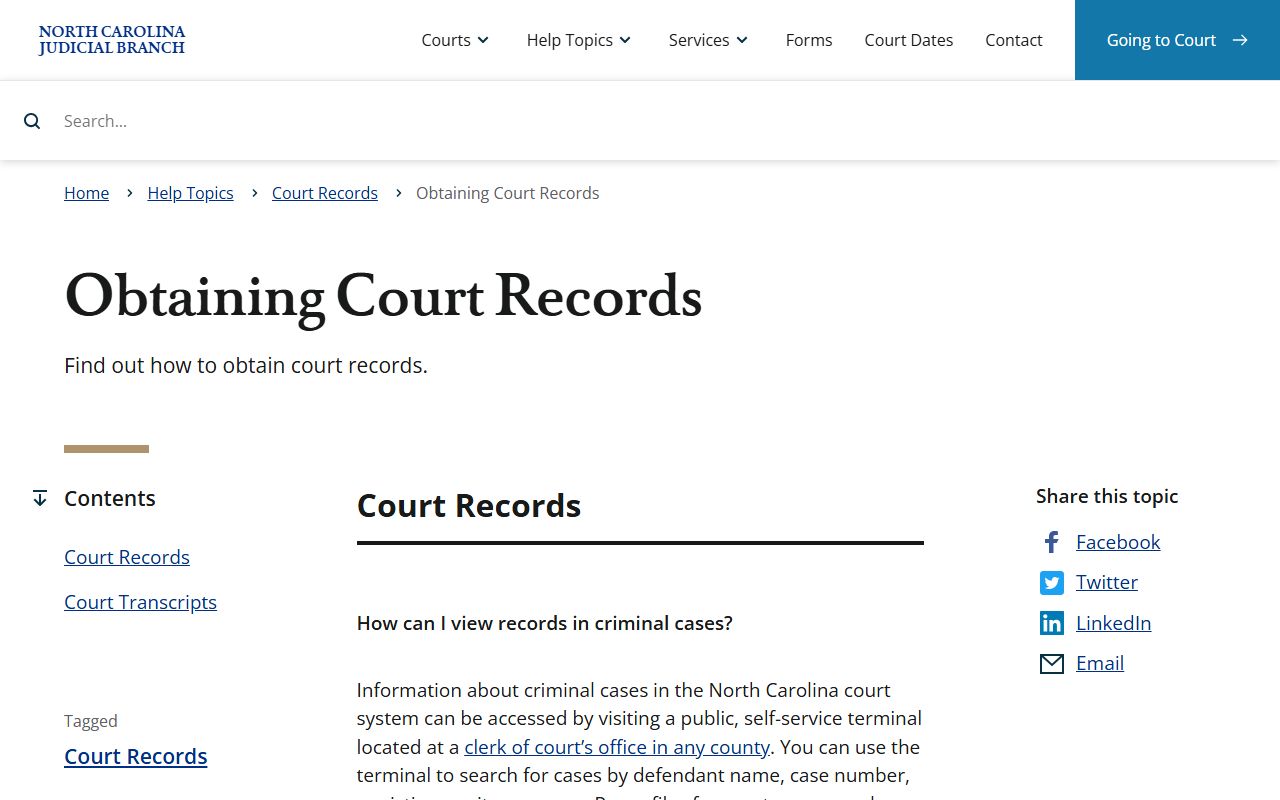
That access channel matters in Montgomery County because online search is only one part of the full court-record request path.
Types of Montgomery County Court Records
Montgomery County court records are held in North Carolina’s unified court system. Superior Court handles felony criminal cases, civil cases above the District Court threshold, and appeals from District Court. District Court handles misdemeanors, infractions, traffic, domestic cases, juvenile matters, small claims, and magistrate matters. The same elected Clerk of Superior Court supports both trial courts and also acts as probate judge for estates. That unified structure keeps the courthouse and clerk central to most record requests.
Some nearby offices keep records that look related but are not court files. The Register of Deeds handles marriage licenses and certified marriage records. The Sheriff’s Office and town police departments may hold incident, crash, arrest, or investigative records. A returned warrant or filed citation can become part of a court record, while the investigative file behind it may remain a law-enforcement record under different access rules.
- Civil court records include complaints, answers, motions, orders, judgments, service returns, and docket entries.
- Criminal court records include charges, warrants, citations, indictments, pleas, dispositions, sentencing entries, and appeal entries.
- Traffic and infraction records can show citation number, charge, court date, waiver status, fines, costs, and DMV reporting.
- Family records include divorce, custody, child support, and related domestic orders, with sensitive material often restricted.
- Estate and probate records include wills, inventories, accountings, creditor notices, guardianships, and special proceedings.
- Judgment records include judgments, liens, lis pendens, and court records that may affect property rights.
For a narrower look at case calendars rather than full files, Montgomery County court dockets are handled through court-date and hearing tools tied to the same statewide system.
What Montgomery County Court Records Show
A court record is more than a name search result. In Montgomery County, a public case record can identify the case number, parties, case type, location, filing date, hearings, charges or claims, orders, dispositions, financial entries, and related judgments. Criminal and traffic matters may add charge descriptions, offense classification, plea, sentence, fine, cost, restitution, bond, probation, appeal status, or failure-to-appear information. Civil and estate files may show petitions, motions, orders, accountings, judgments, notices, and service entries.
| Field | What It Shows |
|---|---|
| Case or Record Number | The court file identifier. Traffic help notes that case numbers may include year digits and CR or IF markers. |
| Party Names | Defendants, plaintiffs, petitioners, respondents, businesses, or other named parties. |
| Case Type and Status | The kind of case and whether it is open, closed, pending, or otherwise categorized. |
| Filing Date | The date the case or filing entered the court system. |
| Hearings | Scheduled court dates, hearing types, continuances, and related calendar activity. |
| Charges or Claims | Criminal offenses, traffic citations, civil claims, estate petitions, or other filed issues. |
| Disposition | The outcome of a charge, claim, motion, or case. |
| Financials | Fines, court costs, restitution, bond forfeiture, payment status, or judgment amounts when public. |
The manifest source for North Carolina court recordkeeping law connects these field types to the clerk’s duty to keep court files, dockets, indexes, and records.
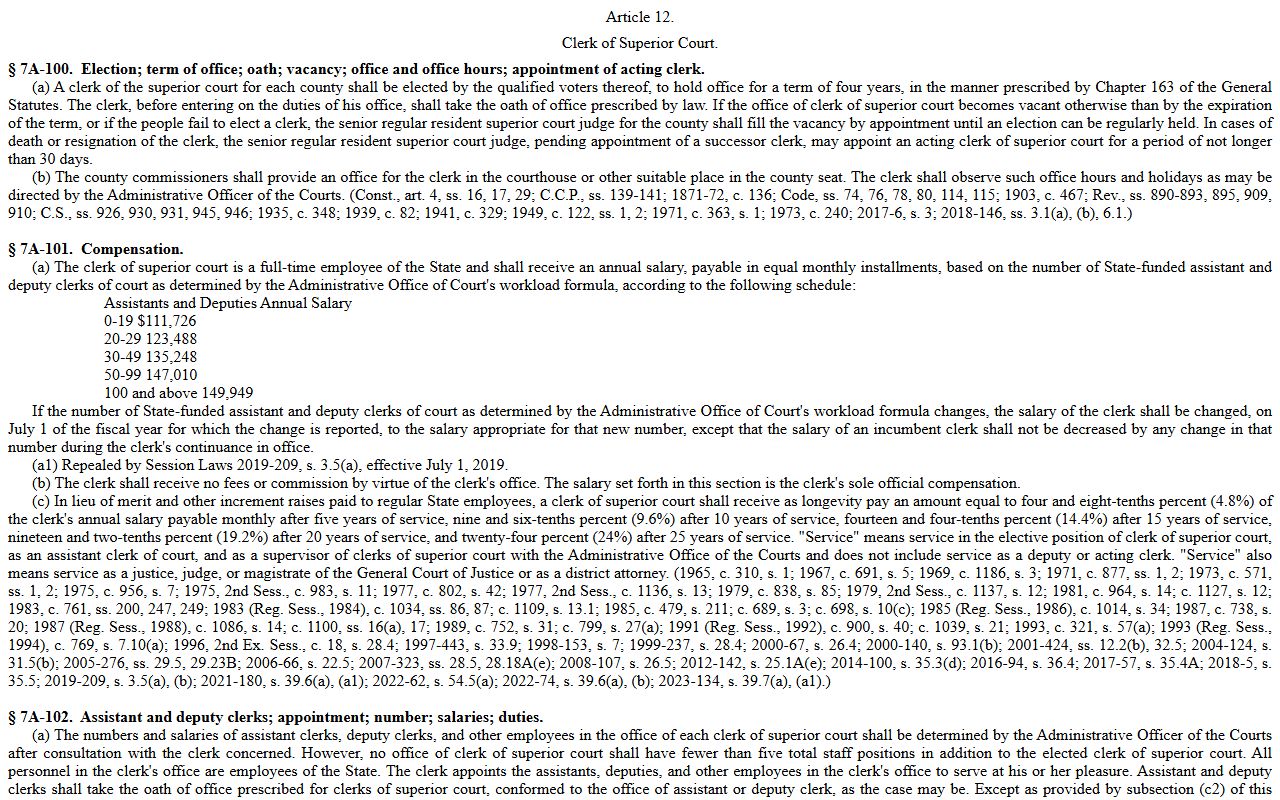
The recordkeeping law is why a Portal search and a clerk file request should be read as linked access points, not as competing systems.
Public Access to Montgomery County Court Records
North Carolina law creates the public-access baseline for Montgomery County court records. N.C. Gen. Stat. § 132-1 defines public records broadly. N.C. Gen. Stat. § 7A-109 requires clerks to maintain court records, dockets, files, and indexes and opens them to public inspection during regular office hours unless a law says otherwise. Those rules support ordinary inspection of many civil, criminal, judgment, and estate materials kept by the Clerk of Superior Court.
The access rule is not unlimited. N.C. Gen. Stat. § 132-1.4 treats law-enforcement investigative records differently, even though returned arrest warrants, returned search warrants, indictments, and criminal summonses can become public court records unless sealed. A request for a sheriff investigative file is not the same as a request for a filed court case. Likewise, vital records follow their own statute, and divorce judgments are court records while marriage certificates are Register of Deeds records.
| Authority | Plain-English Use |
|---|---|
| N.C. Gen. Stat. § 132-1 | Defines public records made or received in connection with public business. |
| N.C. Gen. Stat. § 7A-109 | Requires clerk-maintained court records and public inspection unless restricted. |
| N.C. Gen. Stat. § 132-1.4 | Separates law-enforcement investigative files from public court records. |
| N.C. Gen. Stat. § 15A-151 | Makes expunction records confidential under restricted access rules. |
The manifest source for the public-records definition is central to court-record access in Montgomery County.
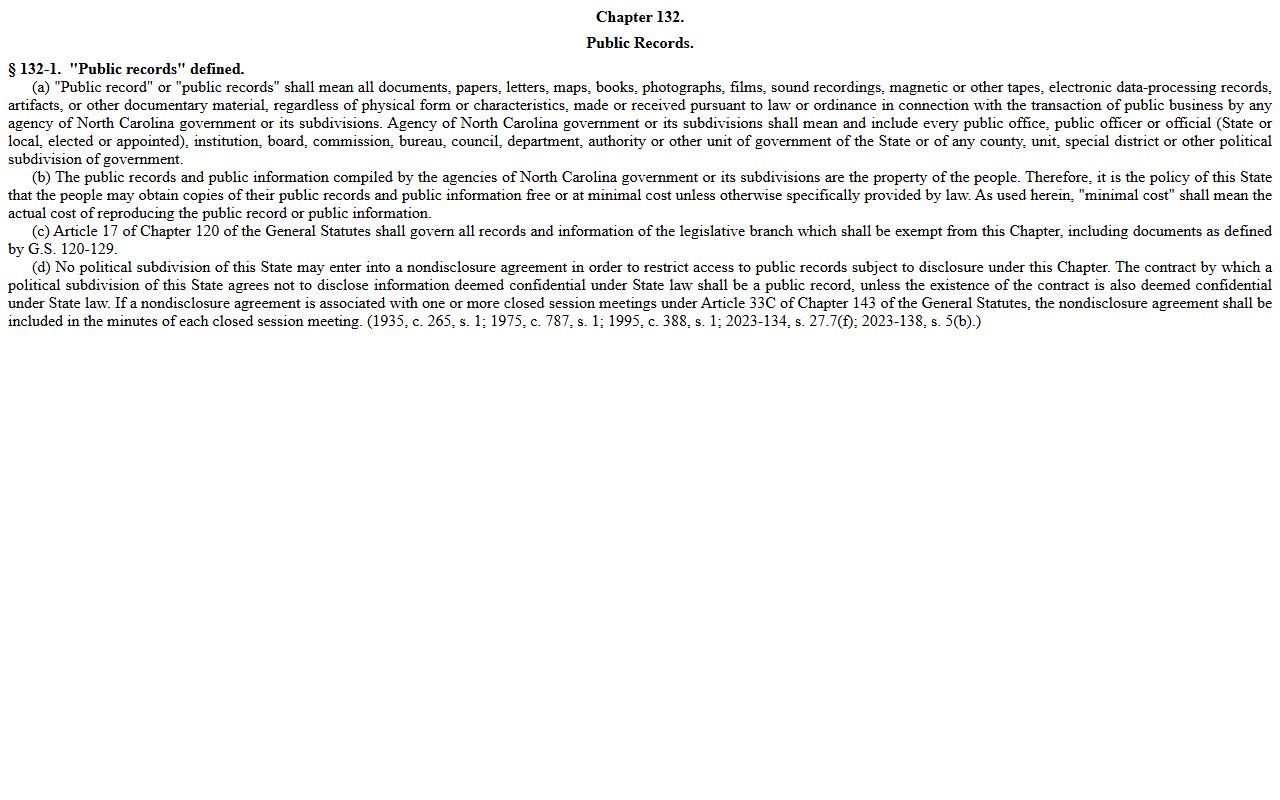
That statute explains why public access starts broad, while later court or confidentiality rules decide what must be withheld.
Restricted Montgomery County Court Records
Several Montgomery County court record categories are not ordinary public files. Juvenile delinquency, undisciplined, abuse, neglect, and dependency records are restricted. Adoption files are not open civil records. Mental-health proceedings are sensitive. Sealed and expunged court records should not appear to ordinary public users in Portal or at the clerk counter. Public copies may also remove Social Security numbers, protected addresses, financial account numbers, minor names, and other personal identifiers.
Expunction is the North Carolina process used to seal or destroy qualifying criminal or juvenile records. Eligibility depends on the specific statute, the offense, the result, the person’s age in some cases, and the timing of the petition. A Montgomery County petitioner generally uses the correct statewide AOC form in the county where the case was handled and waits for clerk, prosecutor, State Bureau of Investigation, and judge processing. If a record is sealed or expunged, a general public search should not be treated as proof that no restricted file exists.
Note: Public search results can omit sealed, juvenile, expunged, and redacted material even when a court event did occur.
The manifest source for the Judicial Branch public-record request service helps separate administrative records from court case files.
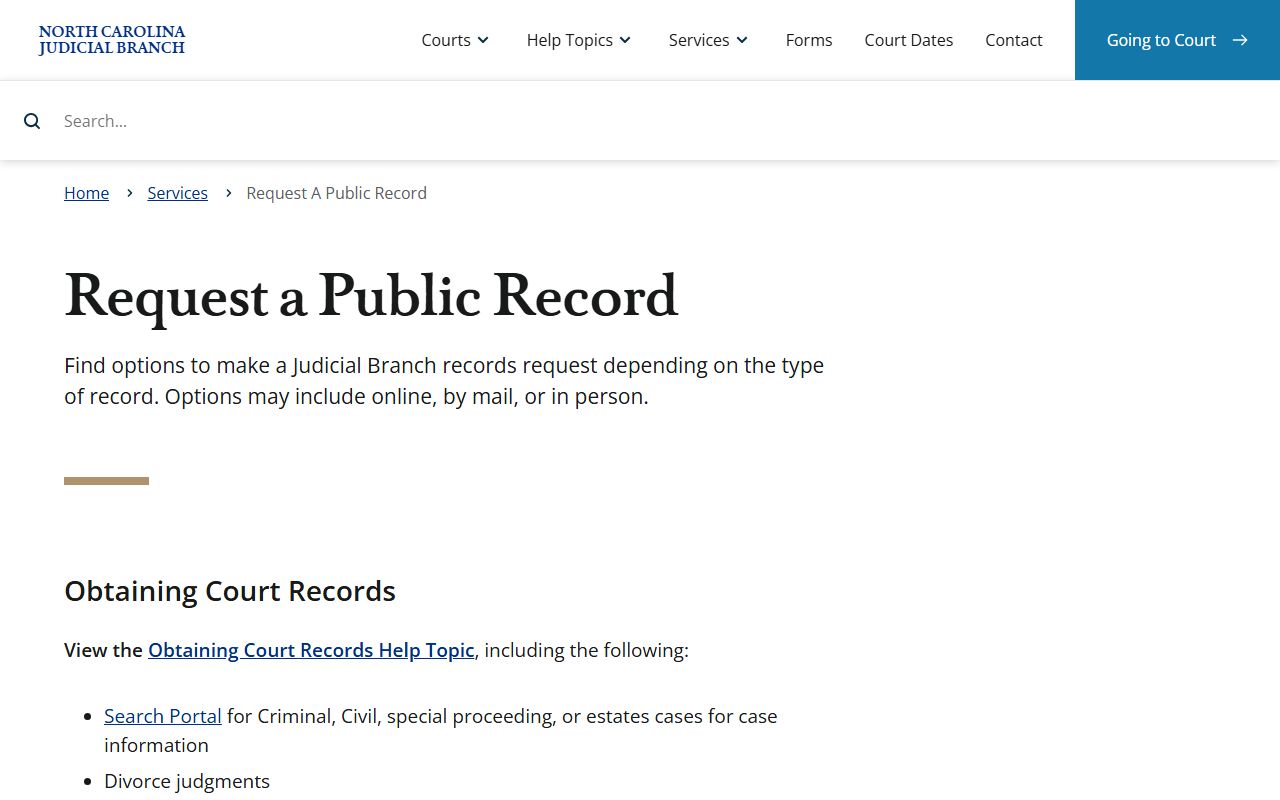
That distinction matters because many Montgomery County case records go through Portal or the clerk, while administrative Judicial Branch records use a different request path.