
Montgomery County Court Dockets
A docket is the court’s running list of case events. In Montgomery County, a docket may show a hearing date, calendar setting, filing event, continuance, order, disposition, or other action tied to a Superior Court, District Court, traffic, criminal, civil, domestic, juvenile, estate, or magistrate-related matter. The research glossary defines a docket as the chronological list of filings, hearings, and court actions. A docket helps track progress, but it does not replace the full court file held by the Clerk of Superior Court.
That difference matters in Montgomery County because the same statewide system can show case information and hearings while certified copies and paper files still run through the local clerk. A docket entry might show that a motion was filed or a hearing was held, but the motion, order, exhibit, or transcript may require a separate request. For a full file review, use the Montgomery County court records process through Portal, clerk terminals, or the paper file at the courthouse.
- Docket
- A list of court events and filings in date order.
- Hearing
- A scheduled court appearance for argument, evidence, plea, or case status.
- Continuance
- A postponement of a hearing or trial to a later date.
- Disposition
- The outcome of a charge, motion, claim, or case.
Search Montgomery County Court Dockets
Montgomery County court dockets are found through the North Carolina eCourts Portal, the Montgomery County Judicial Branch court-date and calendar links, and the Clerk of Superior Court. The Portal offers Search Hearings for court dates and Smart Search for case information. The Montgomery County Judicial Branch page also points to civil calendars and criminal calendars. Because calendars can change, the clerk remains the local point of contact for confirmation.
- Open the eCourts Portal and choose Search Hearings when the goal is a court date or hearing lookup.
- Search by party name, citation number, case number, county, attorney, or date range if the tool offers those fields.
- Use Montgomery County as the location filter to avoid wrong-county results from the statewide system.
- Compare any Portal result with the civil or criminal calendar links on the county Judicial Branch page.
- Call the Clerk of Superior Court before relying on a docket entry for travel, payment, or appearance planning.
The manifest source for North Carolina Superior Court helps explain why some Montgomery County dockets involve felony, larger civil, or appeal matters.
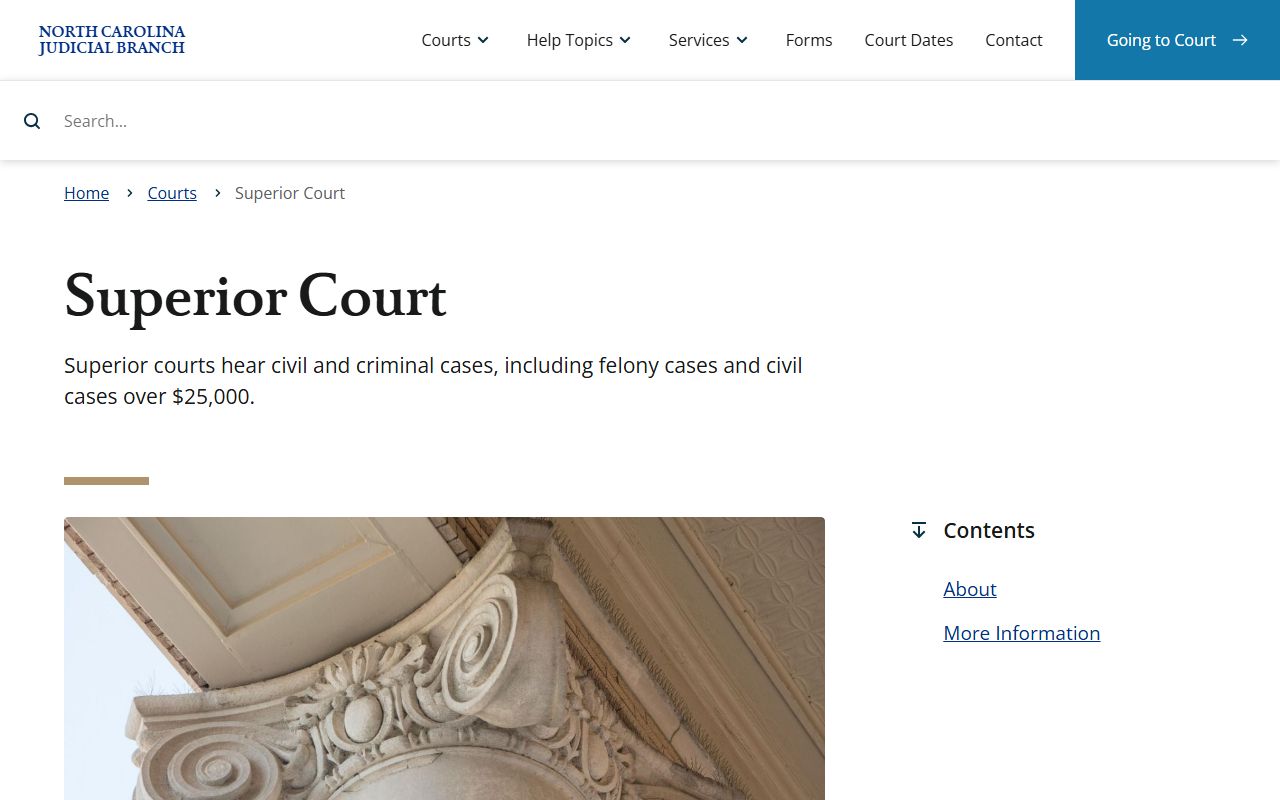
Superior Court context is useful because docket searches should distinguish felony and larger civil matters from District Court settings.
Montgomery County Docket Fields
The research did not capture a live Montgomery County sample docket entry because Portal result pages require JavaScript, cookies, CAPTCHA, and dynamic access. Still, the Portal and Judicial Branch materials identify the fields a reader should expect when reviewing public case and hearing information. Court-date tools can show a scheduled hearing, while Smart Search can point to case information, parties, judgments, payments, and related records.
| Field | What It Shows |
|---|---|
| Case Number | The record identifier tied to the docket and case file. |
| Party Name | The person, business, defendant, plaintiff, petitioner, or respondent tied to the matter. |
| Case Type | The civil, criminal, traffic, estate, family, or other category if available. |
| Court Location | Montgomery County or another county location selected in the statewide system. |
| Hearing Date | The scheduled date for court action, subject to continuance or later update. |
| Event Type | A filing, hearing, order, disposition, judgment, or other docket action. |
| Disposition | The outcome of the charge, motion, claim, or case when one has been entered. |
| Financial Entry | Fines, costs, payments, restitution, or judgment amounts when public and applicable. |
Note: A docket date can change after an online search, so confirm close to the hearing date with official court channels.
Montgomery County Court Docket Sources
Montgomery County belongs to Prosecutorial District 28, Superior Court District 28, and District Court District 28. North Carolina does not operate a separate municipal court system for Montgomery County town cases. That means traffic tickets, misdemeanors, felonies, family matters, juvenile matters, civil cases, estates, and magistrate matters route through the state court system rather than a town court docket. Police agencies may hold incident or crash reports, but the court docket is still a state court record.
| Court or Office | Docket Role | Local Contact |
|---|---|---|
| Superior Court | Felonies, civil cases over the District Court threshold, jury trials, and appeals from District Court. | Judges (704) 986-7016; Clerk (910) 571-3700 |
| District Court | Misdemeanors, infractions, traffic, family, juvenile, and many civil matters. | Judges (704) 986-7012; Clerk (910) 571-3700 |
| Magistrates | Initial warrants, bail, small claims, minor matters, and some waiver functions. | (910) 572-2866 |
| Clerk of Superior Court | Dockets, indexes, public terminals, copies, paper files, payments, and probate records. | (910) 571-3700 |
| District Attorney | Criminal prosecution calendars for Montgomery and Stanly Counties in Prosecutorial District 28. | Local listed number (910) 571-3710 |
The manifest source for Prosecutorial District 28 supports the criminal-calendar side of Montgomery County court dockets.
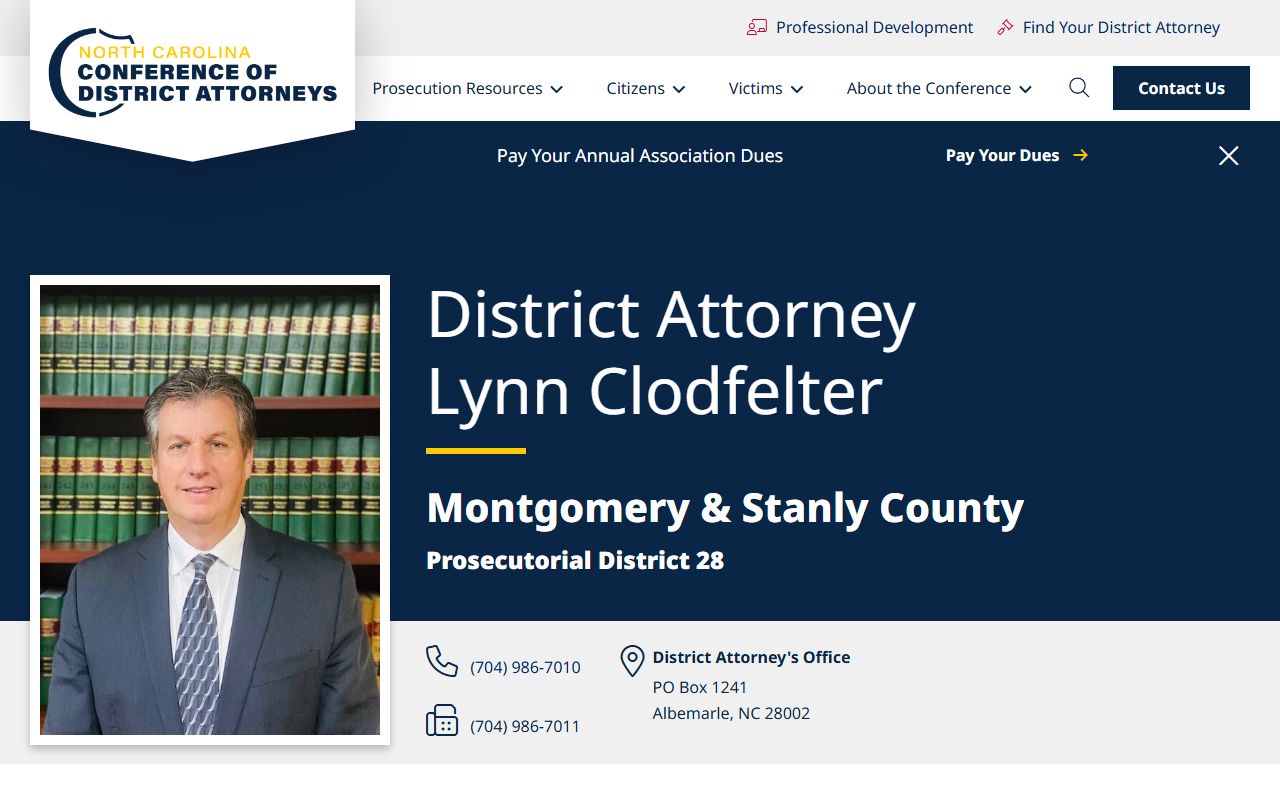
The district attorney source connects docket timing to the prosecution side of criminal cases after charges are filed.
Montgomery County Dockets vs Records
A Montgomery County docket is a tool for tracking court events. A full court record is the underlying case file. A docket may say that an order was entered, but the order itself may need to be viewed through Portal, a public terminal, or the clerk’s paper file. A docket may show a criminal disposition, but the sentencing judgment or probation conditions may require a copy request. Estate and civil docket entries can also point to filings that are not fully visible from a public online result.
| Docket | Full Case Record | |
|---|---|---|
| Format | Chronological list of case events. | Documents, orders, pleadings, notices, and file materials. |
| Best Use | Tracking dates, filings, status, and progress. | Legal review, certified copies, detailed file research, and proof of outcome. |
| Access | Often checked through Portal, hearing search, calendars, or clerk confirmation. | Portal where available, public terminals, paper file review, or clerk copy request. |
| Limits | May omit restricted details or full document text. | May include sealed, redacted, confidential, or fee-based materials. |
Read Montgomery County Docket Entries
Start with the court level. Superior Court docket entries can involve felony charges, higher-value civil claims, jury trials, or appeals from District Court. District Court docket entries can involve misdemeanors, infractions, traffic, domestic cases, juvenile matters, small claims, and magistrate work. The event label tells what changed in the case, while the hearing date tells when a person must appear or when the court plans to act.
Criminal and traffic docket entries need careful reading. A charge is an accusation. A conviction is a guilty verdict or plea. A disposition is the outcome. A case marked called and failed means a person missed court in North Carolina traffic or criminal practice, which can lead to fees, driver-license consequences, or an order for arrest depending on the case. A continuance means the hearing was postponed, not that the case ended.
- Check the exact case number before assuming two similar names are the same person.
- Confirm whether the docket is from Superior Court, District Court, or a magistrate-related matter.
- Look for later entries that may change a prior setting, bond issue, order, or disposition.
- Use the clerk when a certified docket sheet or copy of an order is required.
- Remember that juvenile, sealed, expunged, and redacted information may not be visible.
Criminal Dockets and Counsel
Criminal dockets often raise a practical question: who is representing the defendant? The NCIDS Montgomery County page identifies Montgomery County as Defender District 20A and directs questions about whether a person has a lawyer to the Clerk of Superior Court. The research did not find a standalone local public defender office for Montgomery County, so docket readers should avoid assuming one exists. If an attorney name appears, NCIDS also points users to lawyer contact lookup resources.
The manifest source for NCIDS Montgomery County supports that appointed-counsel context for criminal docket users.
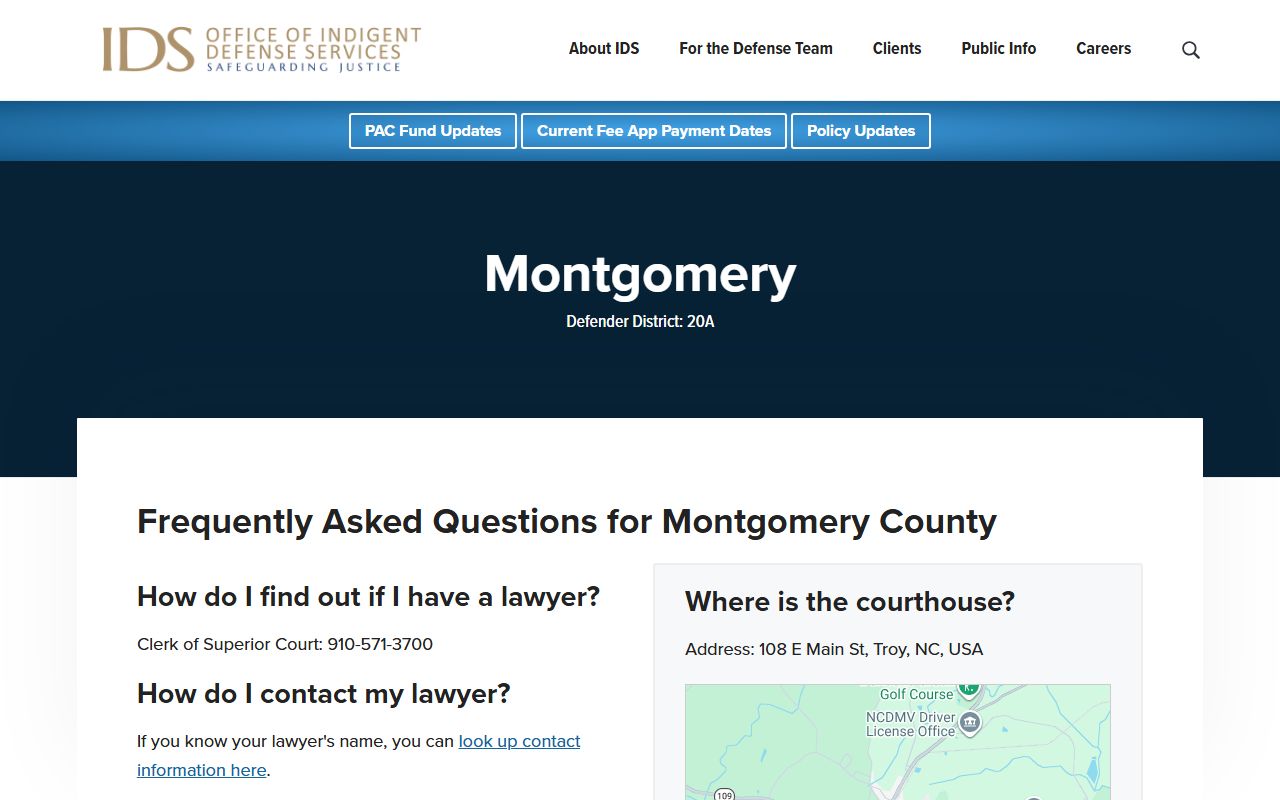
This source helps keep docket interpretation local, especially when a person is trying to understand counsel status before a criminal hearing.