
Montgomery County Superior Court Overview
North Carolina's statewide court structure places Montgomery County in the Superior Court Division and District Court Division. The county page lists Montgomery County in Superior Court District 28, District Court District 28, and Prosecutorial District 28. That means the court structure is state-run, not county-created, even though local court business is handled at the courthouse in Troy.
Superior Court is the primary trial court for felony criminal cases, civil cases involving more than $25,000, jury trials, and appeals from District Court misdemeanor or infraction matters. District Court is also central in Montgomery County because it handles misdemeanors, infractions, traffic citations, divorce, custody, child support, juvenile matters, small claims, and magistrate functions.
The Superior Court overview explains the statewide role of Superior Court, including rotating judges and jury trials. In Montgomery County, the practical record path still runs through the Clerk of Superior Court, because the clerk keeps the case files, indexes, dockets, and public terminal access for both trial divisions.
Montgomery County Trial Courts
Montgomery County does not have a list of separate numbered local courts like some states. The researched court table identifies the state trial-court divisions and offices that serve the county from the same courthouse or regional district contacts. The table below keeps the required court-list format while matching North Carolina's actual structure.
| Court or Office | Type | Address | Phone |
|---|---|---|---|
| Superior Court | Felonies, civil cases over $25,000, jury trials, District Court appeals | 108 E Main St, Troy, NC 27371 | Judges: (704) 986-7016; Clerk: (910) 571-3700 |
| District Court | Misdemeanors, traffic, family, juvenile, civil cases under threshold | 108 E Main St, Troy, NC 27371 | Judges: (704) 986-7012; Clerk: (910) 571-3700 |
| Magistrates | Warrants, bail, initial criminal process, small claims | Montgomery County Courthouse area | (910) 572-2866 |
| Clerk of Superior Court | Records, copies, payments, probate, public terminals | 108 E Main St / PO Box 527, Troy, NC 27371 | (910) 571-3700 |
Montgomery County Court Sources
The U.S. Attorney's Office for the Middle District of North Carolina is relevant only when a matter is federal, not when it is a Montgomery County Superior Court or District Court case.
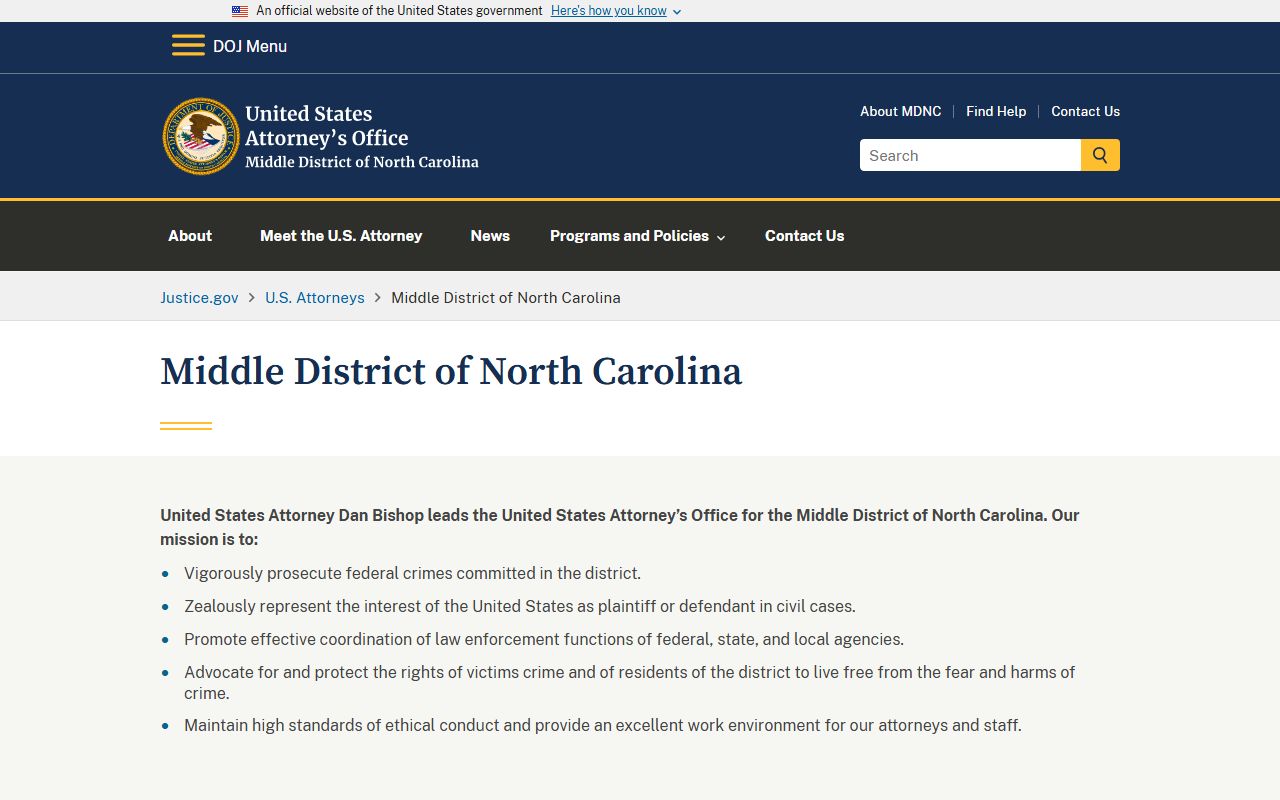
That federal distinction helps keep local court records separate from federal prosecutions, federal civil cases, and PACER docket access.
The U.S. Court of Appeals for the Fourth Circuit is another federal court source, but it does not replace North Carolina appellate review for state Montgomery County cases.
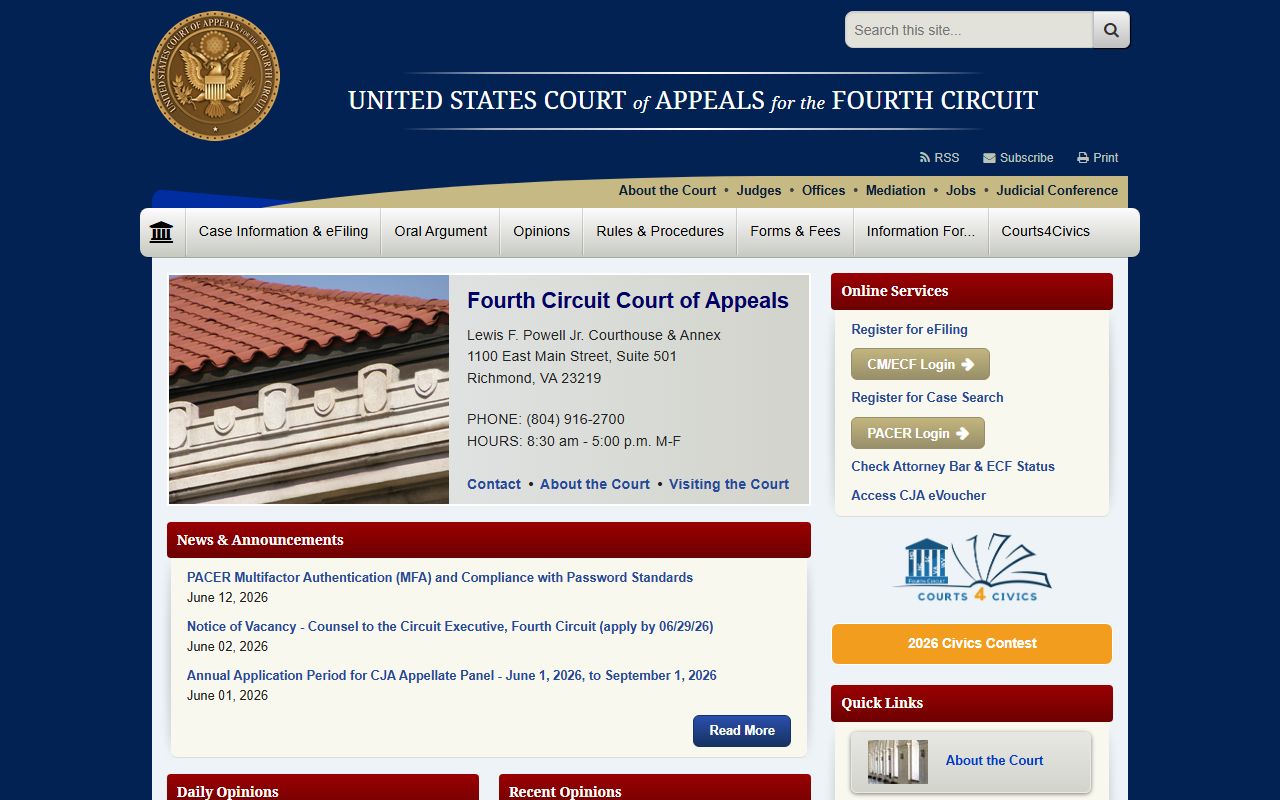
State Superior Court appeals usually move through the North Carolina Court of Appeals, while federal appeals move through a different court system.
Superior Court vs District Court
The State Court Structure Map identifies Superior Court as the primary trial court name for this project, but Montgomery County readers often need both Superior Court and District Court. North Carolina uses a unified clerk and a shared courthouse, so the difference is about jurisdiction and case type rather than two unrelated local offices.
| Point | Superior Court | District Court | Magistrates |
|---|---|---|---|
| Civil Limit | More than $25,000 and other Superior Court matters | Less than $25,000 plus domestic matters | Small claims of $10,000 or less |
| Criminal Role | Felonies and appeals from District Court | Misdemeanors, infractions, traffic, first appearances | Warrants, bail, minor pleas and waivers allowed by law |
| Family Cases | Limited or appeal-related role | Divorce, custody, support, juvenile matters | No general family docket |
| Jury | Jury trials, including 12-person criminal juries when applicable | Misdemeanors and infractions are heard without a jury | No jury trial role |
Montgomery County Case Flow
Criminal matters often begin with a citation, warrant, arrest, or criminal summons. A magistrate may issue process, set bail, or handle the first step after arrest. Misdemeanors and infractions generally stay in District Court unless appealed. Felony cases may begin with early District Court appearances before moving to Superior Court for indictment, plea, trial, disposition, or sentencing.
Criminal flow: Citation or arrest › Magistrate process › District Court first setting › Superior Court for felony matters › Plea or trial › Disposition and sentence › Appeal.
Civil matters depend on amount and case type. Smaller claims can start before a magistrate, many domestic and lower-dollar cases are in District Court, and larger civil matters are heard in Superior Court. The Montgomery County court records access path is still the eCourts Portal for public case information and the clerk for paper files and certified copies.
Civil flow: Complaint or petition filed › service › answer or response › motions or mediation › hearing or trial › judgment › appeal when allowed.
Montgomery County Court Divisions
Superior Court felony records may show warrants, indictments, arraignment events, pleas, motions, trial settings, verdicts, judgments, sentencing entries, probation conditions, and appeal notices. Superior Court civil records may include complaints, answers, motions, orders, judgments, lis pendens notices, and enforcement filings.
District Court records cover traffic citations, misdemeanor charges, infractions, divorce, child custody, child support, juvenile cases, small claims, landlord eviction matters, recovery of personal property, and motor vehicle mechanics' liens. Juvenile and certain family materials are restricted, so a case may exist even when the public record is limited or redacted.
Montgomery County District 28
Montgomery County belongs to Prosecutorial District 28 with Stanly County. The North Carolina Conference of District Attorneys identifies Lynn Clodfelter as the District Attorney for Montgomery and Stanly Counties. The district office mailing address is PO Box 1241, Albemarle, NC 28002, with district office phone numbers (704) 986-7010 and (704) 986-7011. The Montgomery County Contact Directory lists a local District Attorney contact number of (910) 571-3710.
Indigent Defense Services lists Montgomery County in Defender District 20A and directs questions about whether a person has a lawyer to the Clerk of Superior Court at (910) 571-3700. The research did not support describing Montgomery County as having a separate local public defender office, so appointed-counsel questions should use NCIDS, the clerk, or assigned-lawyer lookup channels.
Montgomery County Magistrate Records
Magistrates are not a separate municipal court. In Montgomery County, magistrates operate within District Court authority. They may issue arrest warrants, set bail, accept guilty pleas for minor misdemeanors and infractions where allowed, accept waivers of trial for certain worthless-check cases, and hear small claims matters.
This distinction matters for warrants and court records. An active warrant question may involve the Sheriff's Office or magistrate, while a returned warrant that has become part of a court file may be handled through the clerk. For direct magistrate contact, the researched Montgomery County directory lists (910) 572-2866.
Note: North Carolina has no separate Montgomery County municipal court system for local traffic or misdemeanor dockets.