
Search Montgomery County Court Records
Online Montgomery County court records start with the statewide North Carolina eCourts Portal. The Portal offers Smart Search for case information, Search Hearings for court dates, Make Payments for some criminal and infraction matters, and NC Judgment Search. Montgomery County is an eCourts county, so newer public case information can be searched through that state system rather than a county-built database.
The local access channel still matters. The North Carolina Judicial Branch says criminal, civil, special proceeding, and estate information may be searched at public self-service terminals in clerk offices, and case files may be viewed at the clerk's office in the county where the case is located. For Montgomery County court records, that means the Clerk of Superior Court at the courthouse in Troy remains the best place for paper files, certified copies, older records, and background-check use.
- Open the eCourts Portal and choose Smart Search for public Montgomery County case information.
- Enter a record number or a party name in last, first middle suffix format.
- Use Advanced Filtering Options to choose Montgomery County, case type, case status, or filing-date range when those filters help.
- Use Search Hearings when the main question is a court date rather than a full case file.
- Contact the Clerk of Superior Court for certified copies, paper files, and records that do not appear online.
The Portal requires JavaScript and cookies, and it uses a CAPTCHA challenge every ten minutes. If the online search fails, the fallback is not a third-party site. The official route is the clerk's public terminal, phone contact, mail address, or in-person file request.
Montgomery County Court Search Fields
The Smart Search page accepts either a case number or a name. It also supports wildcard searching, business-name searching through advanced filters, and county-level filtering. The Portal is useful for a first look, but it is not a promise that every document in a Montgomery County court file can be downloaded.
| Field | Type | Use |
|---|---|---|
| Record Number or Name | Text | Search by case number or party name in last, first format. |
| Last Name / First Name | Text | Supports wildcard searches when enough characters are entered. |
| Location | Dropdown | Select Montgomery County to narrow statewide results. |
| Search Type | Dropdown | Use party name, nickname, business name, or sounds-like search when available. |
| File Date Start / End | Date | Limit results to a filing-date range. |
| Case Type / Status | Dropdown | Narrows by dynamic case categories shown inside the Portal. |
Montgomery County Court System
Montgomery County is part of North Carolina's statewide Judicial Branch. The county belongs to Prosecutorial District 28, Superior Court District 28, and District Court District 28. The state system has an Appellate Division, a Superior Court Division, and a District Court Division. In Montgomery County, Superior Court and District Court both sit at the courthouse in Troy and both are supported by the elected Clerk of Superior Court.
Superior Court handles felony criminal cases, civil cases above the District Court threshold, and appeals from District Court. District Court handles misdemeanors, infractions, traffic cases, domestic cases, juvenile matters, small claims, and magistrate matters. Magistrates work within District Court authority and can issue arrest warrants, set bail, hear small claims within the state limit, and handle certain minor criminal or infraction matters.
Case path: Magistrate or District Court › Superior Court when required › North Carolina Court of Appeals › Supreme Court of North Carolina in limited matters.
| Court or Office | Montgomery County Role | Main Record Types |
|---|---|---|
| Superior Court | Trial court for felonies, larger civil cases, and District Court appeals | Felony files, civil judgments, jury trial records, appeal entries |
| District Court | Trial court for misdemeanors, traffic, family, juvenile, and smaller civil cases | Traffic citations, misdemeanors, divorce, custody, small claims |
| Magistrates | District Court officers for warrants, bail, small claims, and minor matters | Warrants, initial process, bond records, small-claims entries |
| Clerk of Superior Court | Unified court clerk and probate judge for estates | Case files, indexes, dockets, copies, estate files, payments |
Montgomery County Courthouse Access
The official Montgomery County Courthouse page lists the courthouse at 108 E Main St, Troy, NC 27371, with public hours Monday through Friday from 8:00 AM to 5:00 PM. The courthouse mailing address is Montgomery County Courthouse, PO Box 527, Troy, NC 27371. Parking is listed as available behind the courthouse.
The Montgomery County court contact directory lists the main courthouse and Clerk of Superior Court number as (910) 571-3700. It also lists Superior Court Judges at (704) 986-7016, District Court Judges at (704) 986-7012, the District Attorney local contact at (910) 571-3710, Guardian ad Litem at (910) 572-1634, and Magistrates at (910) 572-2866.
Montgomery County Courthouse
108 E Main St
Troy, NC 27371
(910) 571-3700
Monday-Friday, 8:00 AM-5:00 PM
Sheriff's Office
111 West Main Street
Troy, NC 27371
(910) 572-1313
Dispatch: (910) 571-7107
Register of Deeds
102 East Spring Street
Troy, NC 27371
(910) 576-4221
Monday-Friday, 8:00 AM-5:00 PM
Montgomery County Court Record Types
Montgomery County court records vary by court and office. Civil court records include complaints, answers, motions, orders, judgments, service returns, and docket entries. Criminal court records can include charges, warrants, citations, indictments, pleas, dispositions, sentences, probation terms, bond entries, and appeal records. Traffic cases are District Court records, while DMV driver records are separate state motor-vehicle files.
Marriage licenses and certified marriage records are not court files. They are Register of Deeds records. Divorce judgments are court records from the Clerk of Superior Court in the county where the divorce was granted, while divorce certificates may also be requested through North Carolina Vital Records. Estate and probate records are handled by the Clerk of Superior Court because the clerk acts as probate judge in North Carolina.
- Civil records: lawsuits, judgments, service papers, motions, and orders from Superior or District Court.
- Criminal records: charges, pleas, bonds, dispositions, sentencing, and probation details.
- Traffic records: citations, waiver eligibility, court dates, fines, costs, and failure-to-appear status.
- Family records: divorce, custody, support, and related domestic case filings, with sensitive details often restricted.
- Estate records: wills, estate applications, inventories, accountings, creditor notices, and guardianship matters.
Montgomery County Court Sources
The Judicial Branch county landing page is the first official source for Montgomery County court services, district assignments, calendars, payments, local rules, and eCourts links.
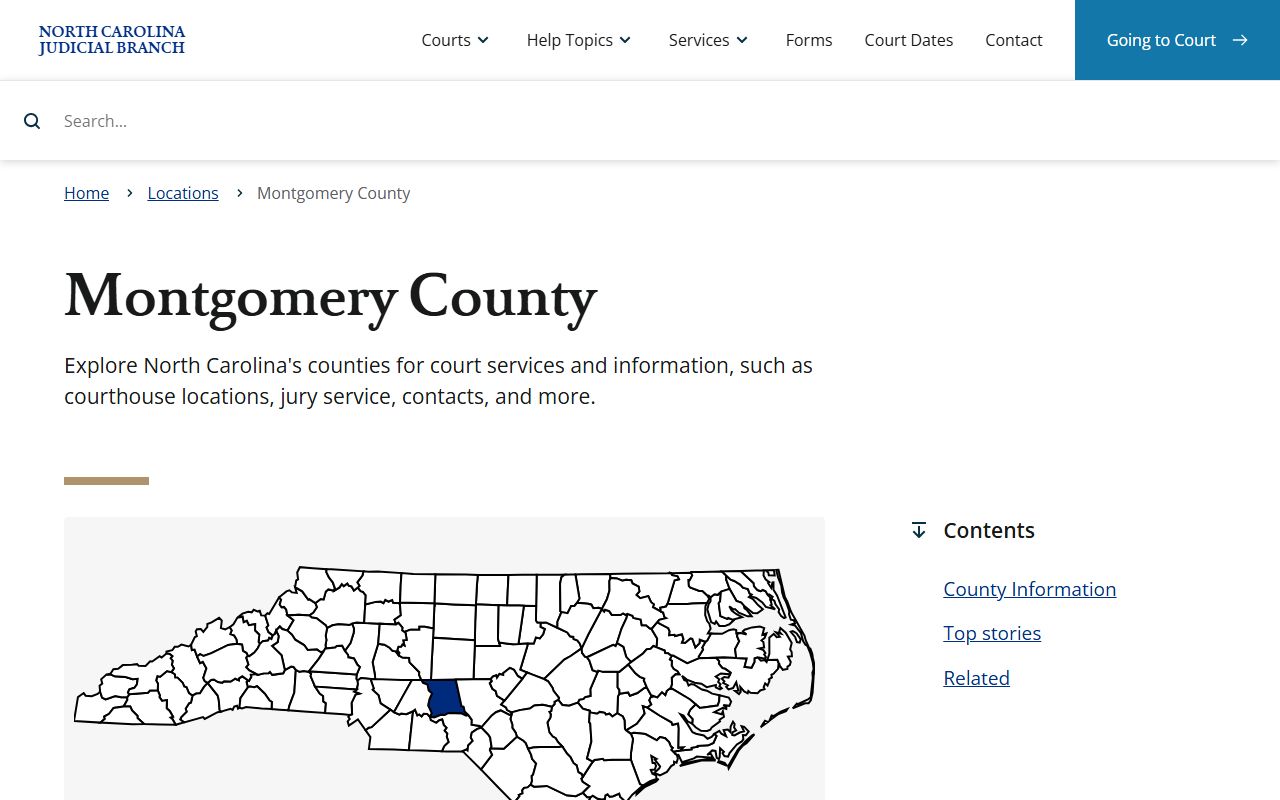
That county page is the best official hub when the task is to move from a broad Montgomery County court records question to a specific court date, payment service, or clerk contact.
The courthouse page supplies the local address, phone number, public hours, mailing address, and parking note for courthouse visits.
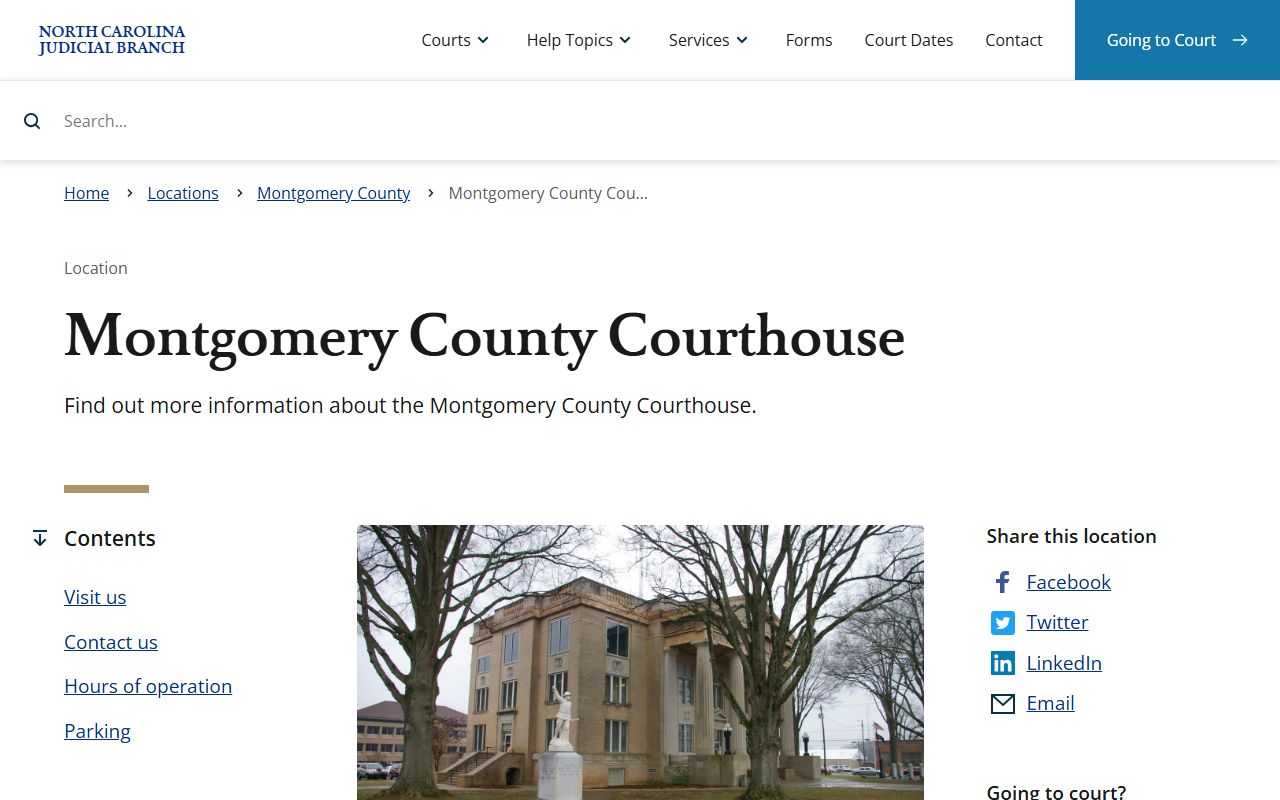
Use the courthouse details for clerk visits, paper-file review, certified-copy requests, and in-person court business in Troy.
The contact directory lists local phone numbers for the clerk, judges, District Attorney, magistrates, Guardian ad Litem, family court, and juvenile counselors.
The contact directory is useful when a record question depends on the court division or office that created the file.
What Montgomery County Records Show
A public Montgomery County court record can show the case number, party names, filing date, court location, case type, status, hearings, docket events, charges, dispositions, judgments, fines, costs, and related court dates. Criminal and traffic records may show charge descriptions, offense level, plea, bond, sentence, failure-to-appear status, and appeal history. Civil and estate files may show pleadings, orders, inventories, accountings, notices, and judgments.
| Field | What It Means |
|---|---|
| Case Number | The court's tracking number, often needed for copies and payments. |
| Party Names | People, businesses, decedents, defendants, plaintiffs, or petitioners tied to the case. |
| Docket | The chronological list of filings, hearings, orders, and case events. |
| Disposition | The outcome of a charge, claim, motion, or case. |
| Judgment | The final court decision, money award, sentence, or enforceable order. |
| Redaction | Removal of protected personal information from a public copy. |
Montgomery County Public Access Rules
North Carolina public access rules treat court records differently from law-enforcement investigation files and vital records. Under N.C. Gen. Stat. § 132-1, public records are broadly defined as materials made or received in connection with public business. For court files, N.C. Gen. Stat. § 7A-109 requires clerks to keep records, dockets, indexes, and files and makes them open to public inspection during regular office hours unless the law says otherwise.
Law-enforcement records have their own limits. N.C. Gen. Stat. § 132-1.4 says investigative records are not public records, but returned arrest warrants, search warrants, indictments, criminal summonses, and certain court records may be public unless sealed. Vital records also follow a separate rule under N.C. Gen. Stat. § 130A-93.
Key access point: the Portal is useful for online case information, but certified Montgomery County court records still come from the Clerk of Superior Court.
Restricted Montgomery County Records
Some Montgomery County court records are not open to ordinary public search. Juvenile delinquency, undisciplined, abuse, neglect, and dependency records are restricted. Adoption files, certain mental-health proceedings, sealed records, expunged criminal records, protected addresses, Social Security numbers, financial account numbers, and minor information may be withheld or redacted.
N.C. Gen. Stat. § 15A-151 makes expunction records confidential. The Judicial Branch describes expunction as the process that removes a charge or conviction from public access and seals or destroys state records of the arrest, charge, or conviction. Adult expunction, juvenile expunction, sealed records, and restricted case files have different rules, so eligibility should be checked through the Judicial Branch expunction topic and the clerk.
Montgomery County Court Programs
The Montgomery County Judicial Branch page lists court programs that can affect how records and cases move, even though no official Montgomery-only drug court, veterans court, mental health court, DWI court, or reentry court page was found in the official source set. Listed programs include Family Court Administration, Guardian ad Litem, Court-Ordered Arbitration, Child Custody and Visitation Mediation, Clerk Mediation, and the Family Financial Settlement Program.
These programs do not replace the court record. They can create events, orders, mediation outcomes, or confidential juvenile and family materials inside a District Court or Superior Court case. Family Court Administration and custody mediation are most relevant to divorce, custody, and support files. Guardian ad Litem matters are tied to child welfare and juvenile cases, where public access is limited.
Montgomery County Sheriff Records
The Montgomery County Sheriff's Office is located at 111 West Main Street in Troy. Sheriff Pete Herron is named on the official page. The office lists business hours Monday through Friday from 8:00 AM to 5:00 PM, with deputies available 24 hours a day. The Detention Center is at 206 Glen Road and is described as a 106-bed maximum-security facility for adult male and female inmates.
No official public Montgomery County, NC jail roster was found in the inspected county sources. Inmate questions should start with the Detention Center phone line, the Sheriff's Office, statewide NCDAC tools for state prisoners and probationers, and NC SAVAN or VINELink for custody notifications. The Montgomery County Sheriff NC app on Apple and Google Play advertises crime reporting, tips, and interactive communication features, but the inspected store text did not advertise a jail roster or active-warrant search.
The county jail custody side differs from the court case side. Booking, custody, release, commissary, visitation, and incident reports are sheriff or detention matters. Charges, court dates, pleas, dispositions, sentences, and warrants returned to court are court records. For booking and custody details, use the Montgomery County inmate records page.
Montgomery County Marriage and Probate
Marriage records and divorce records split between two offices. The Register of Deeds issues marriage licenses and certified marriage records, while divorce judgments are court records from the Clerk of Superior Court in the county where the divorce was granted. North Carolina Vital Records may issue divorce certificates, but the court file itself remains with the clerk.
Probate in Montgomery County is handled by the Clerk of Superior Court acting as probate judge. Estate records can include wills, applications, inventories, accountings, creditor notices, orders appointing personal representatives, small estate administration, summary administration, year’s allowance matters, guardianships, and caveat proceedings. A contested will caveat may be heard by a Superior Court judge.
- Personal representative
- The person authorized by the clerk to collect estate assets, pay valid debts, and distribute property.
- Intestate
- A person died without a valid will, so state law controls who inherits probate assets.
- Caveat
- A formal challenge to the validity of a will, heard before a Superior Court judge.
Montgomery County Record Fees
The research source gave a clear fee table for Register of Deeds vital-record services, but it did not expose a Montgomery-specific court-copy or probate filing-fee table. Court-copy and estate-fee questions should be confirmed with the Clerk of Superior Court. Marriage license and certified marriage-copy fees are published by the Register of Deeds and Permitium sources.
| Item | Amount or Channel |
|---|---|
| Marriage license | $60.00, in office only |
| Certified marriage certificate | $10.00 each |
| Uncertified marriage certificate | $1.00 each |
| Certified birth or death certificate | $10.00 each through Permitium |
| Online vital-record service fee | Additional non-refundable $4.00 service and card processing fee |
| Court copies and estate filing fees | Confirm current amount with the Clerk of Superior Court |
More Montgomery County Sources
The North Carolina court structure page explains the statewide system that controls Montgomery County court records.
That statewide structure is why Montgomery County does not run separate county-created trial courts or municipal courts for local case dockets.
The types of courts page gives the Superior Court and District Court division roles used in Montgomery County.
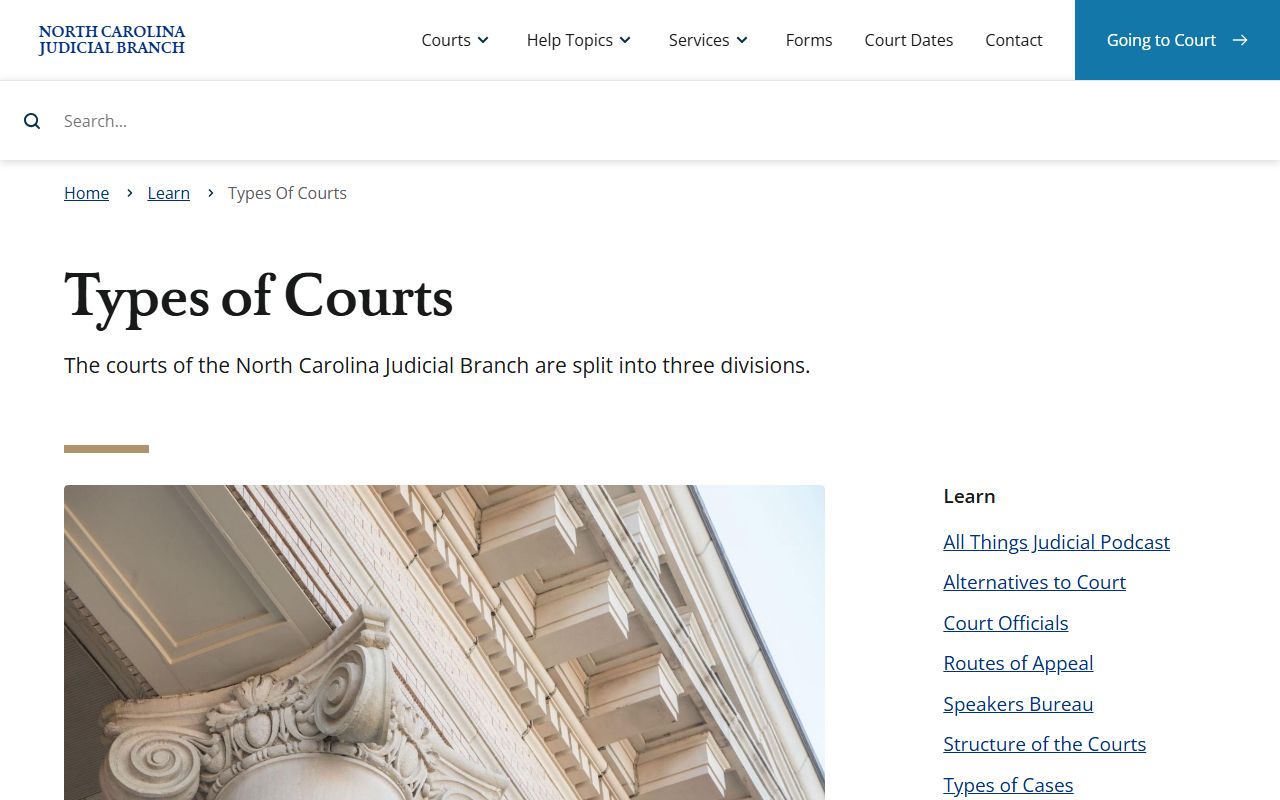
Those court-type rules explain why felonies, misdemeanors, traffic cases, divorce, small claims, and juvenile matters do not all follow the same record path.
The court officials page describes the Clerk of Superior Court's record-keeping and probate duties.
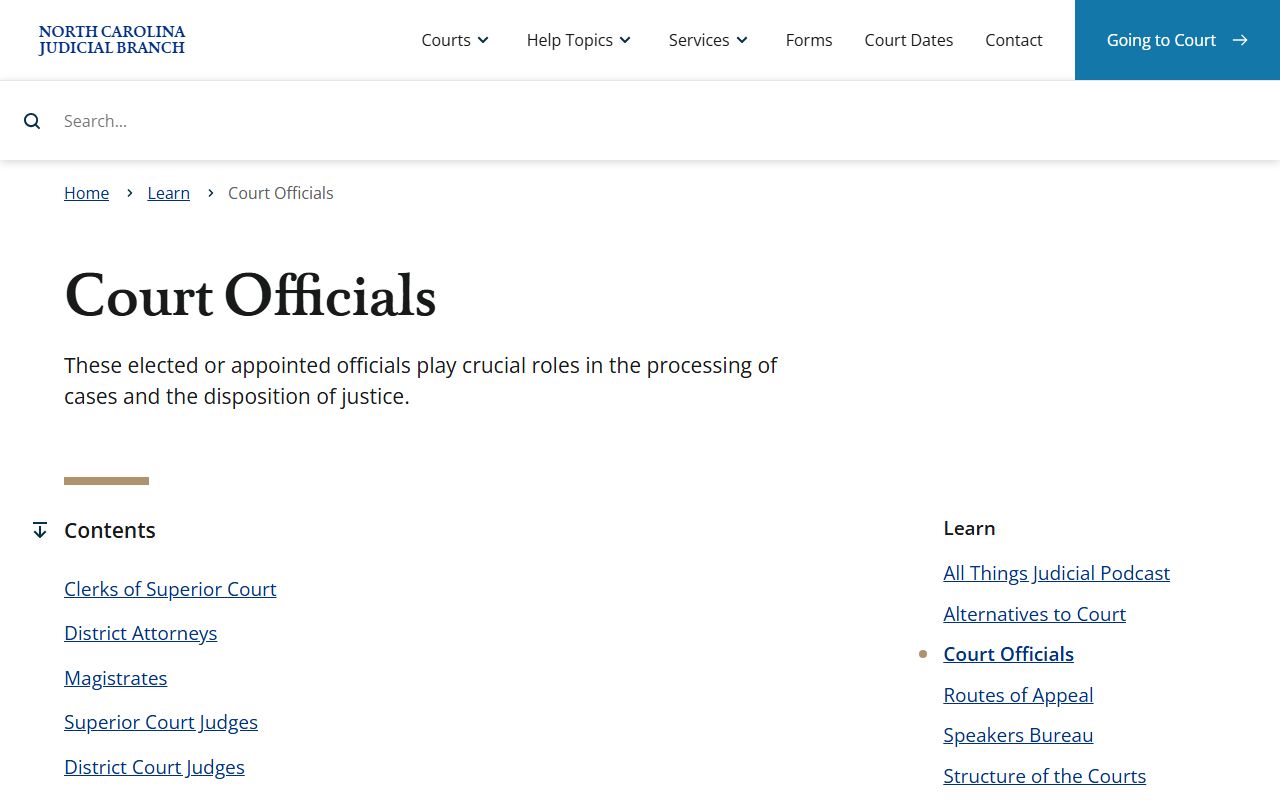
That clerk role is central in Montgomery County because one elected Clerk of Superior Court supports both trial courts and estate matters.
Census QuickFacts places Montgomery County's 2024 population estimate at 26,364 and its 2020 land area near 491.5 square miles.
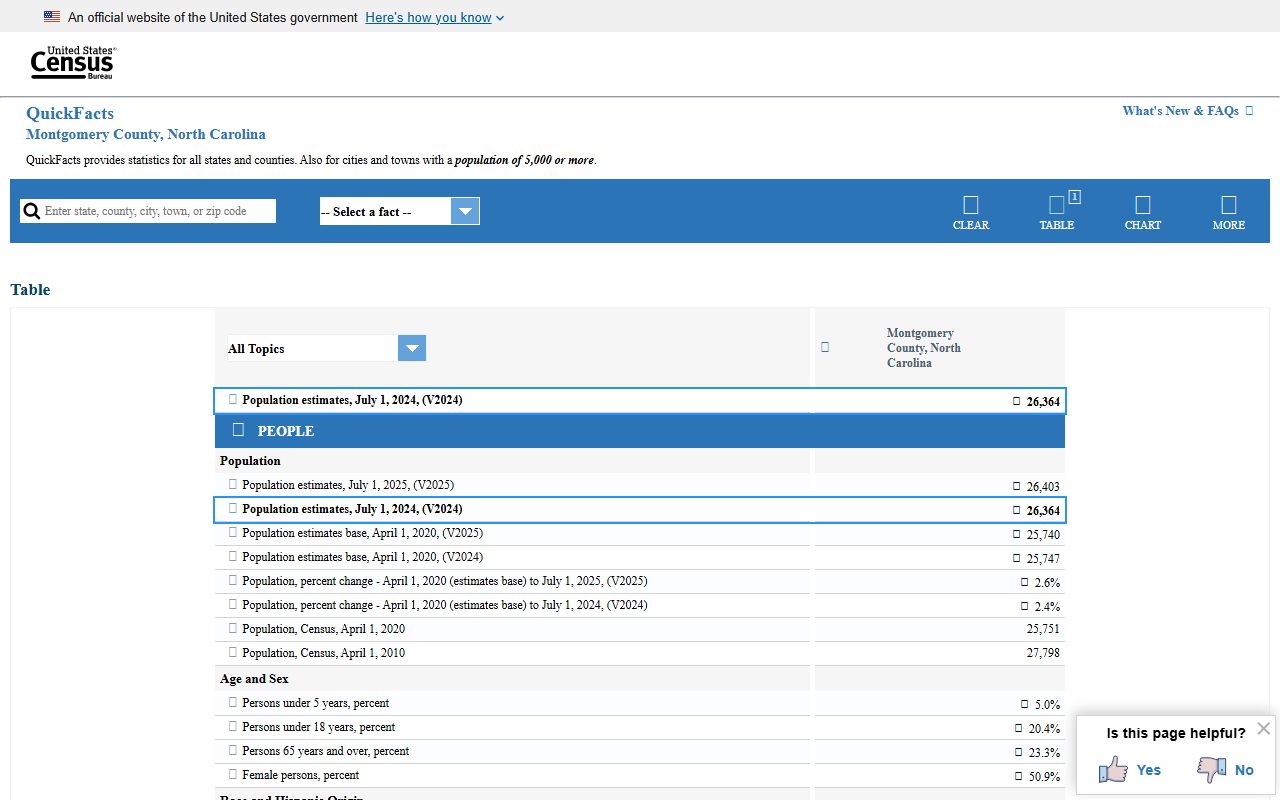
The rural Piedmont setting helps explain why the courthouse, sheriff, Register of Deeds, and county administration are clustered in Troy.
Montgomery County Court History
The courthouse in Troy gives Montgomery County court records a long local anchor. The North Carolina State Historic Preservation Office courthouse nomination describes the current courthouse as a three-story tan brick, Neo-Classical building completed in 1921. It replaced an 1886 courthouse and was designed by Benton and Benton of Wilson County at an approximate cost of $150,000.
The recent technology milestone is eCourts. The Judicial Branch county page identifies Montgomery County as part of the October 2024 Track 6 rollout that brought digital records and services to several southern and central Piedmont counties. That change explains why newer case information may be easier to locate online while older files, certified copies, and paper records still require clerk contact.
Note: Older Montgomery County court records may exist in paper, legacy index, or archived form even when newer cases appear online.
Montgomery County Court Records FAQ
Can Montgomery County court records be searched online?
Yes. Public case information is searched through the statewide eCourts Portal. The Portal is the first online source for case information, court dates, payments, and judgments, but paper files, certified copies, older records, and background-check use still route through the Clerk of Superior Court.
Does Montgomery County have municipal courts?
No separate Montgomery County municipal court system was found in the official research. Town police departments may hold incident or crash reports, but resulting court cases are handled through North Carolina District Court or Superior Court.
Who handles Montgomery County probate records?
The Clerk of Superior Court acts as probate judge for estates in North Carolina. Estate files, wills, small estate matters, and probate copies are handled through the clerk in the county where the estate is located.
Are active Montgomery County warrants posted online?
No official Montgomery County, NC active warrant web search was found in the inspected sources. Warrant questions should be routed through the Sheriff's Office, magistrates, the Clerk of Superior Court, or an attorney.